As a self-confessed WWII buff, I’ve always been drawn to Amsterdam for more than its canals, bikes, and lively bar scene. The city is rich with remembrance and reflection, a place where you can trace the hidden scars of occupation, resistance, and survival during one of Europe’s darkest chapters. If you are similarly interested in wartime history, Amsterdam offers some profound experiences. In this article, we will discuss some of the most significant sites to explore across the city.
1. Anne Frank House
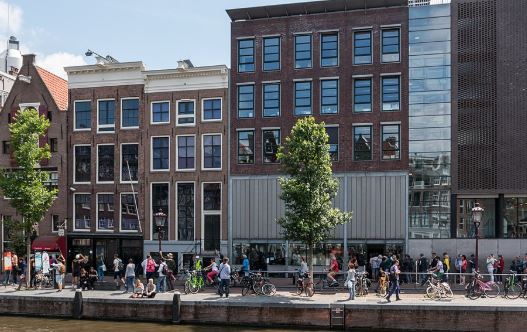
No visit to Amsterdam’s WWII heritage is complete without the Anne Frank House (Prinsengracht 263–267). This canal-house museum was the hiding place of Anne Frank and her family. It allows you to walk through the same rooms where eight people lived in secrecy for over two years, until their arrest in 1944. The exhibition also places Anne’s story in the wider context of persecution and discrimination. Visiting the house offers one of the most personal and moving perspectives on the war’s impact in my opinion.
2. Verzetsmuseum (Dutch Resistance Museum)
Located at Plantage Kerklaan 61, the Dutch Resistance Museum examines how the Netherlands responded to Nazi occupation. Established in 1984 and in its current location since 1999 housed in a historic building once used as a Jewish cultural centre, it combines artefacts, films, and personal stories to show how ordinary people faced extraordinary circumstances. The permanent exhibition traces the years from May 1940 to May 1945, concentrating on daily life under occupation and the choices – resist, collaborate, survive – that individuals had to make. Visiting this museum gives a solid framework to understand the broader wartime experience in Amsterdam.
3. Hollandsche Schouwburg
Once a theatre and later a deportation centre, Hollandsche Schouwburg (Plantage Middenlaan 24) now serves as a memorial for the 46,000+ Jewish people who were held there before being taken to camps. The building houses exhibitions and a wall listing thousands of names – quiet, powerful, and deeply affecting. It’s a site of memory rather than spectacle, one that deserves time and stillness. Note that entry does not require a ticket.
4. National Holocaust Names Memorial
Dedicated in 2021, this memorial in Weesperstraat honours approximately 102,000 Dutch Jewish victims of the Holocaust. Conceived by Studio Libeskind, the memorial consists of red-brick walls inscribed with names and mirrored surfaces that invite reflection. It lies in the former Jewish quarter and is an essential stop for anyone wanting to confront the scale and human cost of the atrocities that took place, even in this seemingly peaceful city.
5. Guided Tours & Hidden Stories
Beyond the museums and memorials, Amsterdam offers guided walking tours or tram-based tours that focus specifically on wartime history. Many explore the little-known corners of the city, hiding places, resistance meeting points, and stories of civilian bravery. These tours help amplify the context you gain from the larger institutions and connect you more closely to the city itself.
Practical Tips for Visiting
- Allow time for reflection: Some of these sites cover difficult history. Plan for quieter segments in your day.
- Book ahead: The Anne Frank House and Dutch Resistance Museum often require advance tickets.
- Combine locations: Many sites sit close to each other in the Plantage neighbourhood – efficient for a half-day of exploration.
- Go early: Fewer crowds make it easier to absorb the atmosphere, especially in the more contemplative centres.
Why It Matters
What stands out in Amsterdam’s wartime heritage is how the ordinary and extraordinary intertwine: a musician turning underground courier, a hidden attic turning into a sanctuary, a theatre turning into a mechanism of deportation. The sites listed above don’t gloss over the hard parts. They ask you to consider how freedom was lost, how complicity occurred, and how resilience rose in response.
In visiting these places, you connect not just to events but to people, to choices made under occupation, to lives interrupted, and to the ripples of memory that still persist today.
Exploring Amsterdam’s WWII history requires more than ticking off tourist sights. It demands attention, empathy, and time. But for those of us fascinated by the era, the city offers depth, complexity, and a chance to walk through history nearly every step of the way. Whether you spend a half-day visiting one or two sites, or you build a full itinerary around these themes, you will leave with more than photographs, you will leave with connection.
Safe travels and thoughtful exploring in Amsterdam.
Until next time, slán agus beannacht.